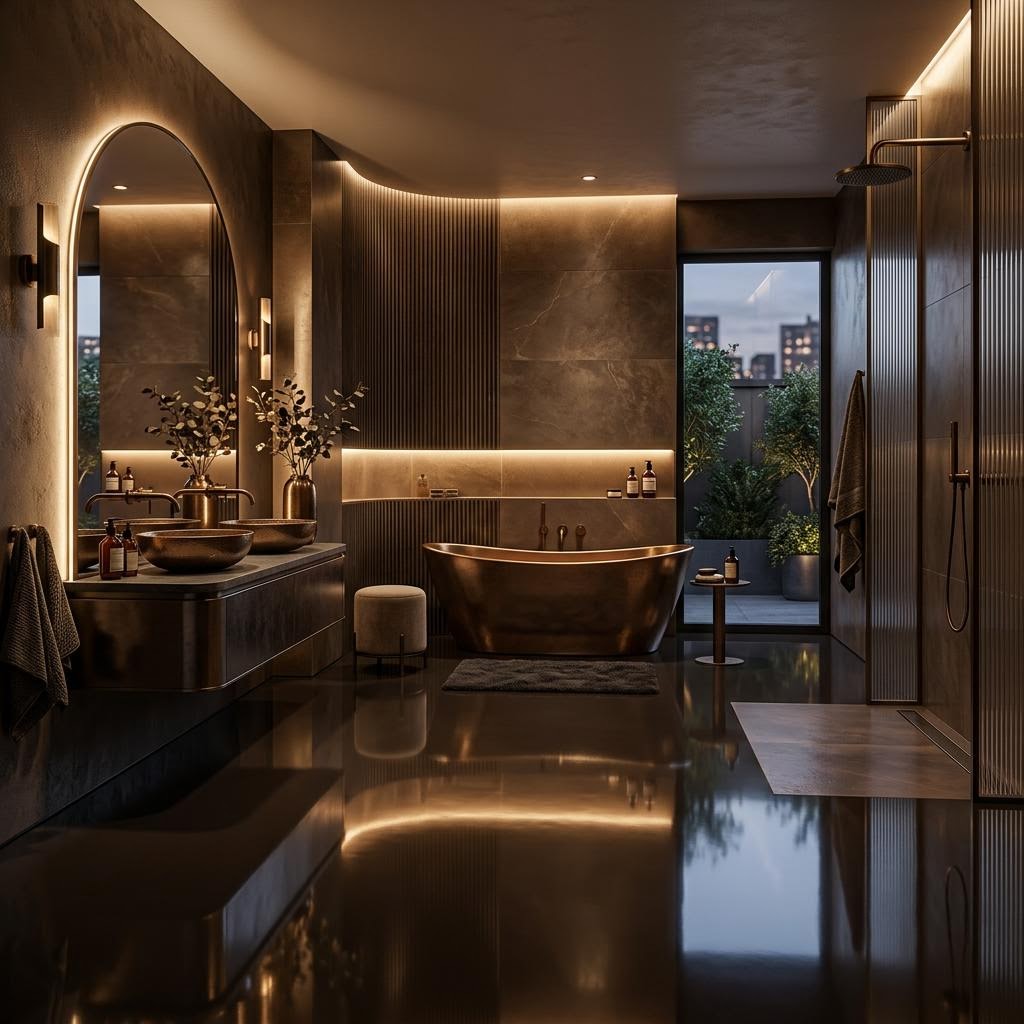
Wet-area planning
Resin bathroom and spa floors: questions to resolve before specifying
Ask the right questions about waterproofing, falls, barefoot slip performance and cleaning before specifying decorative resin in a bathroom or spa.
The short version
Bathroom and spa suitability must be confirmed for the complete assembly and actual wet use. Seamless, low-sheen resin is not automatically waterproof or slip-proof.
Define exactly where the resin will be used
Bathrooms and spas appear among the applications for our decorative resin flooring service. Start by separating dry circulation, splash zones and areas subject to frequent or standing water. A bathroom floor outside a shower is not the same brief as a continuously wet treatment area.
Describe who uses the space, whether they are barefoot and what oils, soaps or treatments may reach the floor. Confirm the proposed use with the installer and the responsible designer before treating a reference image as evidence that the same finish is suitable everywhere.
Who is responsible for the waterproofing assembly?
A decorative resin finish is not automatically the waterproofing layer required by the building design. Ask the project team to identify the membrane or approved assembly, its compatibility with the finish and the details at walls, penetrations, drains and thresholds. Confirm responsibilities in writing.
The same clarity is needed for falls. Thin resin should not be assumed to form drainage gradients on an unsuitable base. Ask how water will reach the waste without pooling, and how the waste connection will remain maintainable. Product suitability and applicable building requirements need project-specific confirmation.
What evidence supports the finished surface under wet use?
Matte and satin describe appearance, not a barefoot slip classification. Soap, body oils and cleaning residue can change the conditions at the surface. Ask what slip-performance evidence or assessment is appropriate for the specified finish and intended environment, including any public-use requirements.
Review a finished sample for texture and cleaning practicality. More texture may change the visual calm that attracted you to resin, while a smoother surface may not answer the wet-use brief. Resolve that trade-off before approving the decorative appearance rather than expecting a topcoat adjustment to have no visual effect.
- Identify dry, splash and frequently wet zones separately.
- Confirm waterproofing, falls and drain interfaces with the project team.
- Request appropriate wet-use and barefoot performance information.
- List cleaning products, oils and treatment chemicals for compatibility review.
Can staff or occupants maintain the specified finish?
Spas may use disinfectants, treatment products and repeated cleaning that differ from a domestic bathroom routine. Provide product names, dilutions and contact times for review. Do not assume a coating suitable for household use will tolerate steam cleaning, immersion or every commercial chemical.
Ask for a handover plan covering initial wet use, cleaning and inspection of seals and junctions. Agree how damage or a failed edge detail will be reported and repaired. The strongest specification is one that connects the desired seamless appearance with an approved wet-area design and a workable care routine.
Want a clear answer for your space?