Light & finish
Metallic epoxy in bright rooms: gloss, daylight and reflections
Plan a mirror-gloss metallic floor around windows, changing daylight and reflected fittings, without confusing brightness with guaranteed UV performance.
The short version
Evaluate the floor flat under real daylight and artificial light. Specify the whole coating system for the room’s exposure, not just its reflective appearance.
Mirror gloss reflects the room as well as the pigment
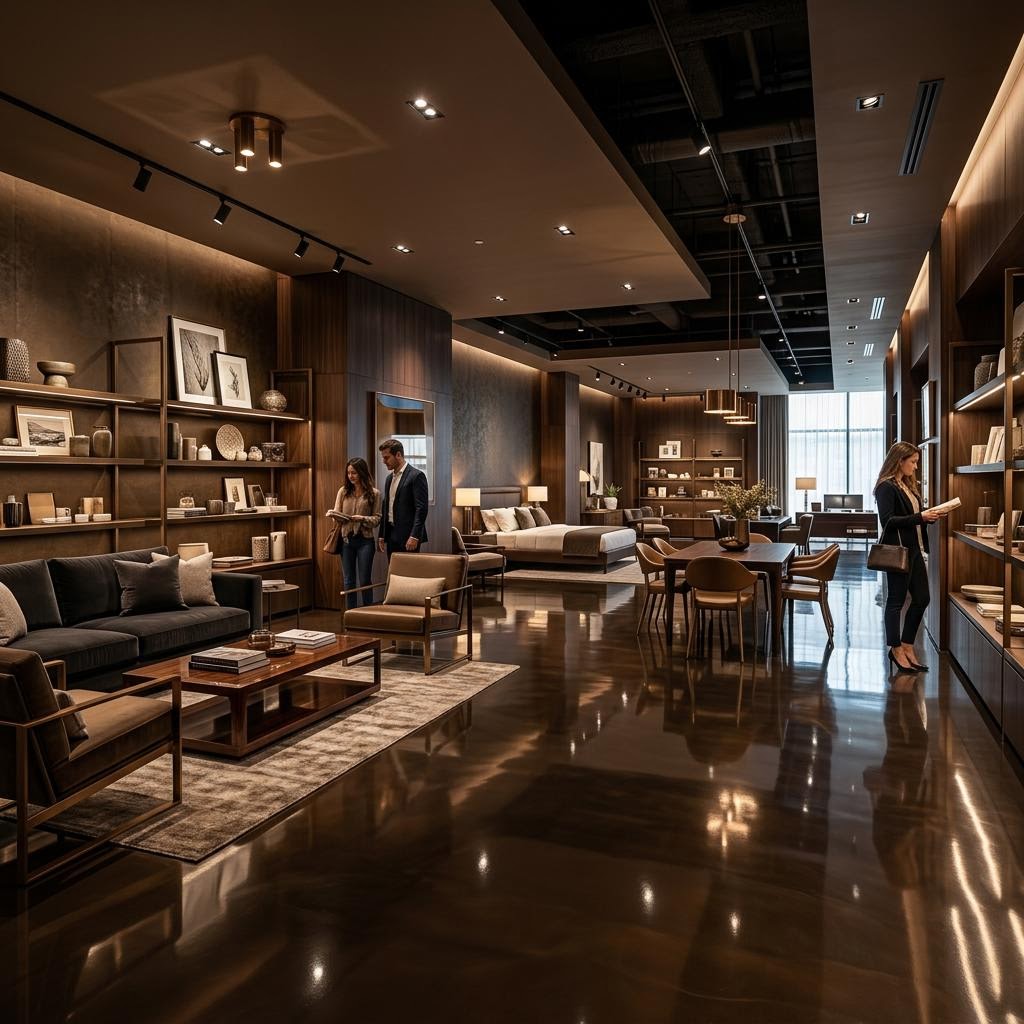
The mirror-gloss finish of metallic epoxy floors is part of their visual appeal. In a bright room, however, the floor also reflects window shapes, overhead lights and dark furniture. Those reflections can become as noticeable as the metallic movement itself.
A white patch in a photograph may be reflected glazing rather than a pale pigment. Before choosing a finish from images, ask what lighting produced the appearance. Place a physical sample horizontally near the largest window and view it from the room entrance, not only from directly above.
Check morning, midday and evening conditions
Low sun can create a strong band of reflection along a floor, while diffuse daylight may make the same finish look softer. Take notes at different times of day, including when blinds are normally open. Consider the seated view from a dining table or lounge, where glare may be more noticeable than at standing height.
For example, an entry aligned with a long glazed wall may show a bright reflected strip through the main circulation route. That does not automatically rule out gloss. It means the lighting, shading and pigment contrast should be considered together rather than approving a sample in a windowless meeting room.
Keep reflectivity and UV resistance separate
Gloss describes how light reflects from a surface; it does not establish whether the resin beneath will retain its colour in sunlight. Tell the installer where direct sun reaches the floor and ask for the proposed resin and topcoat combination to be confirmed for that exposure.
A UV-stable topcoat does not make every underlying layer immune to colour change. Ask about the limitations of the complete system, including clear layers and pigments. Avoid treating a generic UV claim as a guarantee that every part of the floor will remain visually identical indefinitely.
- Mark direct-sun areas on the room plan.
- Identify the glazing, shading and normal blind positions.
- Review a sample with the proposed clear finish, not unfinished resin.
- Request product-specific advice for exposed thresholds and glazed entries.
Coordinate the lighting before the floor is finalised
Rows of small downlights and a large diffuse fitting produce different reflections. Where the floor is a major feature, review the lighting layout with the designer and test a sample under a similar fitting. A bright reflective floor can also make dust, footprints or cleaning residue easier to see from certain angles.
Decide whether the objective is a dramatic reflective surface or a visually quieter room. If mirror gloss is central to the design, work with its reflections instead of expecting them to disappear. Record the agreed lighting conditions so later changes to fittings are not mistaken for a change in the floor itself.
Want a clear answer for your space?