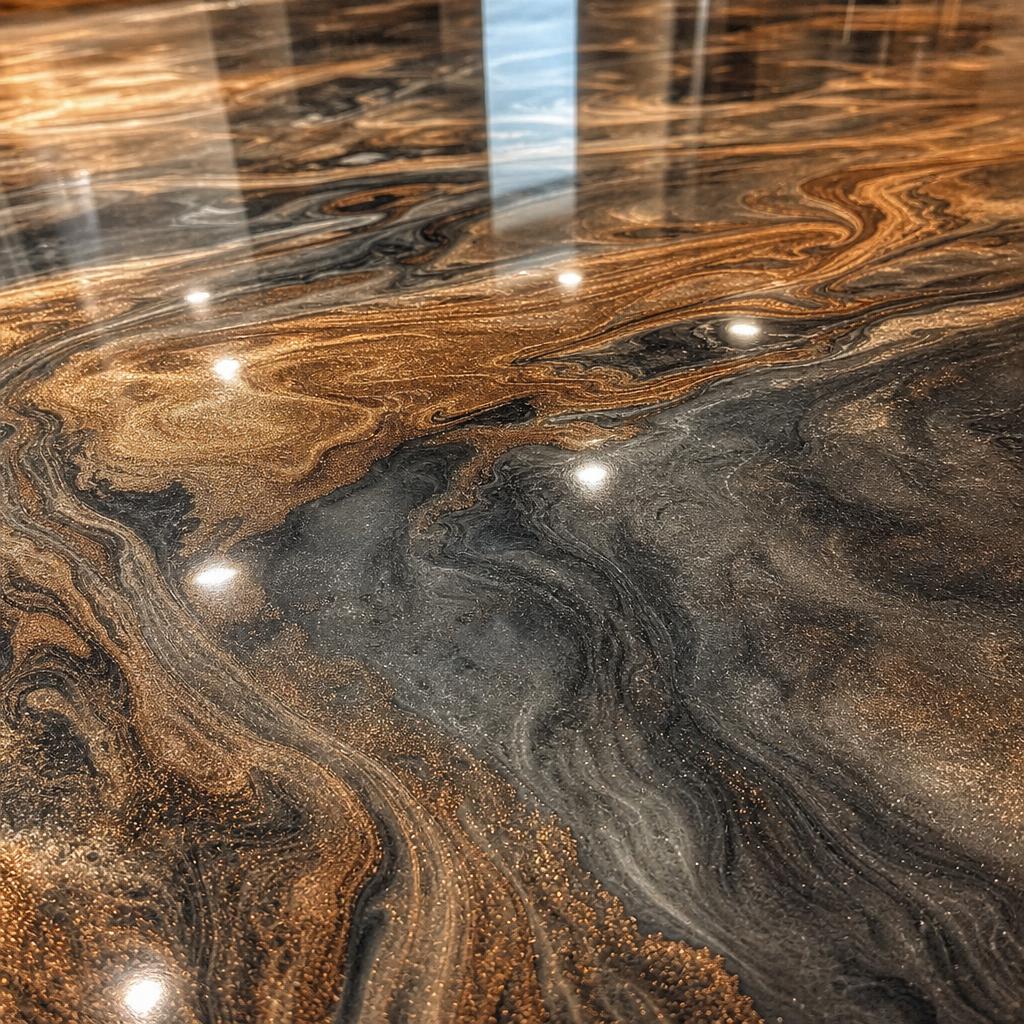
Mistakes to avoid
The biggest DIY epoxy flooring mistakes — and when to call a professional
Epoxy kits can look simple online. The difficult part is everything that happens before the coating goes down.
The short version
Most failed DIY floors are not caused by the roller. They are caused by moisture, contamination, poor preparation or incorrect cure conditions.
Mistake 1: treating epoxy like ordinary paint
A floor coating is a bonded system, not simply a colour applied to a surface. The concrete needs to be assessed, cleaned and mechanically prepared so the system can adhere. Painting over dust, laitance, oil or an old incompatible coating creates a weak foundation that may peel or delaminate.
A kit can contain decent materials and still fail when the substrate has not been prepared for them.
Mistake 2: trusting a quick acid wash
Acid washing is often presented as a universal preparation step. It may not remove every contaminant, it can leave residue and it does not replace proper mechanical profiling where the slab needs it. Without reliable dust removal and a suitable profile, the coating may not form the bond you expect.
- Oil and chemical contamination may remain in the concrete.
- Dust can settle back onto the slab before coating.
- An uneven surface profile can create inconsistent adhesion.
- Corners, edges and repairs are easy to miss.
Mistake 3: ignoring moisture
Concrete can look dry while still releasing moisture vapour. Moisture pressure beneath a coating can cause bubbling, cloudy patches, whitening or loss of adhesion. This is particularly important in garages, ground-level slabs, newly poured concrete and areas with drainage or damp history.
A professional can identify when moisture testing or a different system is needed before the decorative work begins.
Mistake 4: mixing or applying outside the conditions
Temperature, humidity, pot life and mixing ratios affect how resin flows and cures. Guessing the ratio, mixing too much at once or working beyond the product’s usable time can create soft areas, roller marks, bubbles and visible joins.
The larger the floor and the more decorative the finish, the less forgiving these variables become.
When a professional is the better decision
DIY may suit a small, low-risk project where you understand the substrate and product requirements. Contact a professional when the floor is large, valuable, moisture-prone, previously coated, cracked, heavily contaminated or expected to handle vehicles and commercial traffic.
The cost of advice and preparation is usually much smaller than removing a failed coating and starting again.
Want a clear answer for your space?