Interior finishes
Decorative resin vs metallic epoxy: quiet finish or statement floor?
Compare low-sheen tonal decorative resin with hand-swirled metallic epoxy through the way each finish works with architecture, furniture and light.
The short version
Choose which element should lead the room. Low-sheen decorative resin supports a quieter palette; metallic movement makes the floor a more expressive feature.
Decide how much attention the floor should take
The distinction starts with visual intent. Our decorative resin floors are described through tonal neutrals and low-sheen finishes. They suit a brief where joinery, furniture or the architecture should remain the focus rather than competing with a strongly patterned surface.
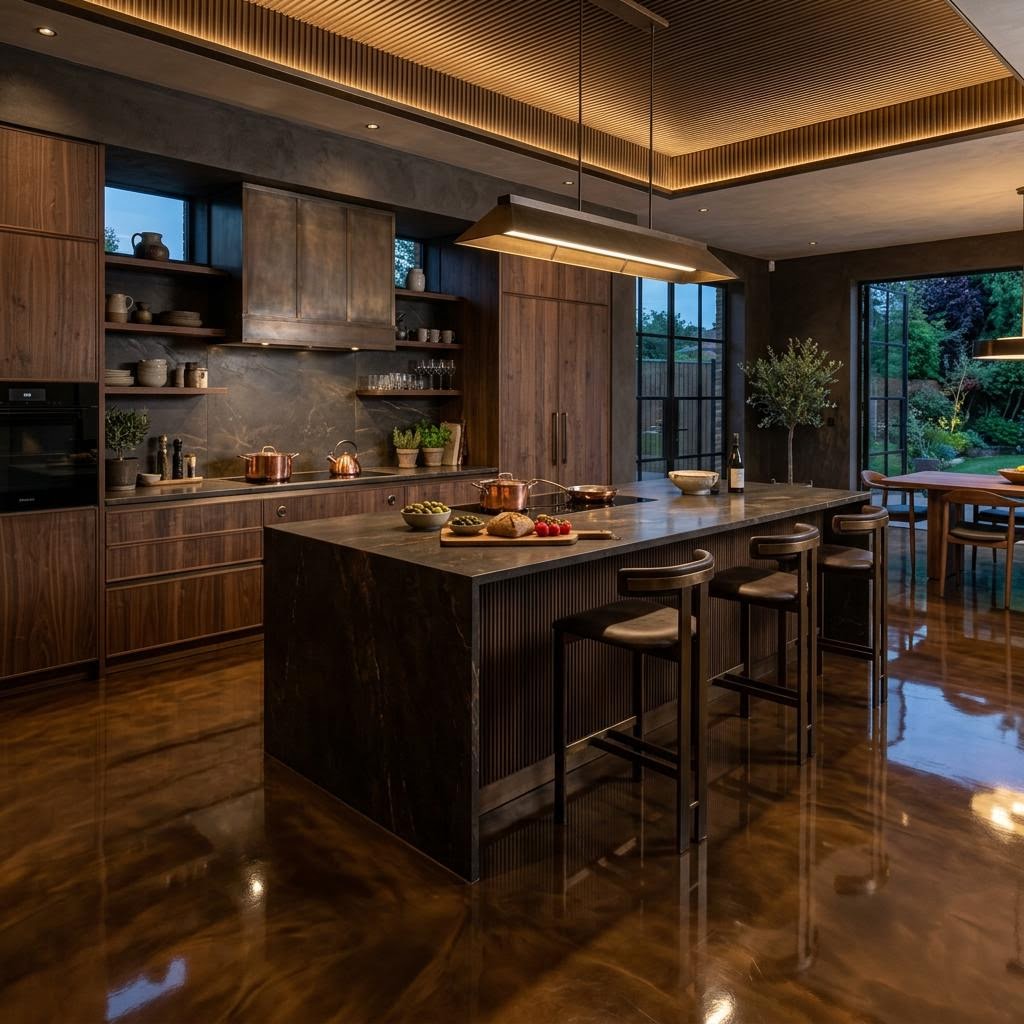
By contrast, hand-swirled metallic epoxy flooring uses pigment movement and a mirror-gloss finish to create depth and reflection. It is a more expressive option, not simply a shinier version of the same decorative effect. Compare the complete visual language rather than treating the names as interchangeable.
Look at reflections as well as colour
A low-sheen surface tends to make reflected fittings less prominent, while mirror gloss brings windows and lighting into the floor’s appearance. Neither removes the need to assess the actual room. Place both samples horizontally and look from a doorway, a dining chair and the longest sightline.
In a room with veined stone, textured timber and several decorative elements, a quieter floor may help the materials sit together. In a restrained lobby or entry, metallic movement may supply the main feature. These are composition choices rather than rules about which finish is more luxurious.
Keep practical requirements separate from visual preference
The preferred look still needs a system suitable for the room. Tell the installer about wet use, sunlight, cleaning and heating before approving either finish. Low sheen is not a slip rating, and a seamless appearance is not evidence of a compliant wet-area waterproofing assembly.
Decorative resin is listed for kitchens, bathrooms and spas, while metallic epoxy is listed for feature interiors including living rooms and lobbies. Those applications provide a starting point, not automatic approval for every exposure within them. A shower, a domestic kitchen and a dry entry require different detail discussions.
- Choose the room’s focal point before choosing floor movement.
- Compare samples under the intended lighting and beside real finishes.
- Confirm texture, exposure and cleaning needs independently of sheen.
- Ask about the complete installed system, not just the decorative layer.
Write a brief that explains the preferred effect
For decorative resin, record the tonal direction and whether matte or satin is preferred. For metallic, describe the base tone, contrast and movement. Avoid using one reference image to request the calm of a low-sheen floor and the reflection of a mirror-gloss floor at the same time.
If you remain undecided, compare the samples in the occupied design scheme rather than in isolation. The useful decision is which finish supports the room you want to use every day. Neither needs to imitate the other to be successful.
Want a clear answer for your space?